PEGGY GUGGENHEIM: NON ASPETTÒ IL PERMESSO
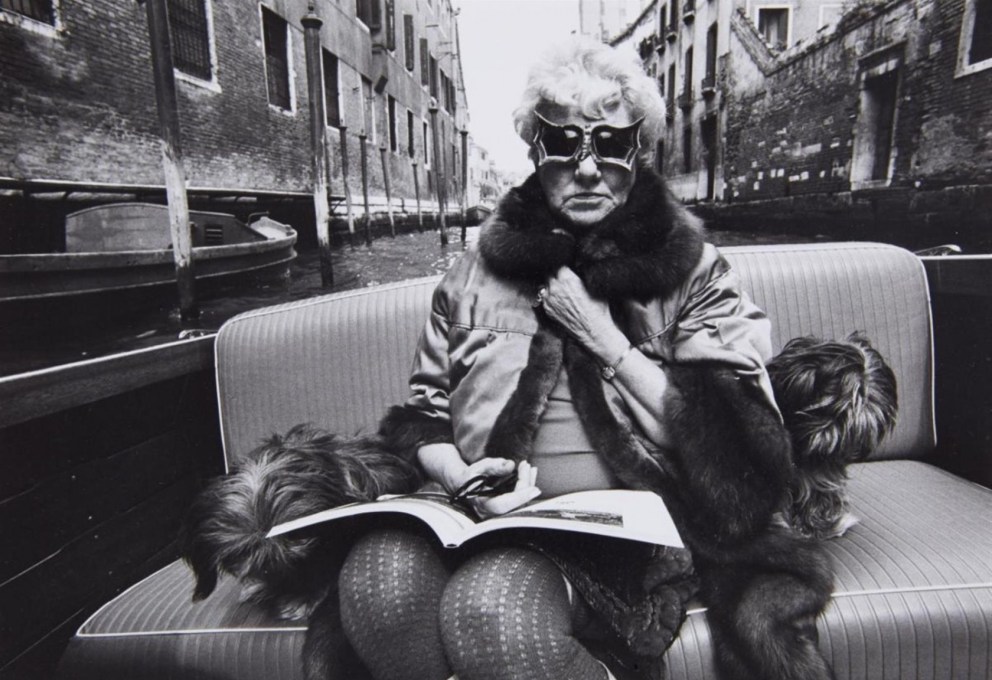
L’articolo di questo venerdì è dedicato ad una donna stile Baxter, anzi forse è il contrario, è una di quelle donne dalla quale il blog Baxter può prendere ispirazione: Peggy Guggenheim.
Se ripenso al Guggenheim di Venezia, a quella gita fatta al liceo, mi viene da ridere: la professoressa di francese tronfia con i suoi 50 biglietti venne verso di noi, facendo il grave errore di chiederci se ci andasse di entrare, invece di dirci di entrare visto che aveva già comprato i biglietti. Fu come l’inizio di un acquazzone: una goccia timida, poi due, poi tre e poi il diluvio dei no. E poi si rivolse verso di me, come ultima ancòra di salvezza, ma la mia risposta poco convincente, fu il colpo di grazia: “se dobbiamo entrare… andiamo.” Non si seppe mai se le rimborsarono i biglietti.
Invece Peggy Guggenheim non chiese mai il permesso per le sue imprese. Sì, è vero, era una donna ricca, ma è altrettanto vero che anche le donne ricche della sua epoca avevano poco margine di manovra nella società. Avrebbe potuto scegliere tra l’essere moglie ricca e devota, ed una donna che sceglie, che guarda oltre, che sconfina da un ruolo già scelto ed approvato dalla società. La seconda opzione è sempre costata a tutte le donne, da quelle ricche a quelle povere, da quelle intelligentissime a quelle meno colte, dalle imperatrici alle adolescenti controcorrente. Quel tipo di donne che hanno attraversato le epoche dell’umanità hanno in comune moltissime cose.
A tutte loro il blog Baxter dice grazie, e sempre saranno ricordate ed omaggiate con un articolo.
Per chi non la conoscesse Peggy Guggenheim è stata una collezionista d’arte, il nome vi risuona perché a Venezia al palazzo Venier dei Leoni, c’è stata la sua casa che oggi è uno dei musei di arte moderna più importanti al mondo. Quel palazzo “incompiuto” sul Canal Grande che scelse nel 1947 come sua residenza definitiva.
Visse a Parigi, Londra, New York città nelle quali imparò a costruire la donna che voleva essere: libera, anticonformista, e mecenate di molti artisti ad oggi di fama mondiale. A Peggy Guggenheim devono dire grazie artisti del calibro di: Jackson Pollock, Jean Cocteau, Robert de Niro Sr per essere stati scoperti; invece, Georges Braque, Salvador Dalí, Robert Delaunay, Piet Mondrian e Francis Picabia ringraziarla per aver acquistato alcune delle loro opere in un periodo storico non facile, salvandole per sempre dalla razzia dei nazisti.
Insomma, di Peggy Guggenheim ve ne potrei continuare a scrivere tantissimo, ma quello che la vita di questa donna mi ha lasciato è il senso del dovere di preservare l’arte del suo tempo, come si addice ad ogni mecenate; e la forza liberatrice e la scoperta di sé stessa: tipiche delle donne che lasciano un segno nell’epoca che hanno vissuto.
Peggy Guggenheim ha dimostrato che i privilegi economici e sociali possono essere una vera e propria benedizione, anche se usati in una vita eccentrica, ma mai banale, e sempre protesa verso gli altri, con la nobile missione di valorizzare e salvare un pezzo d’arte del suo tempo. E di lei ho apprezzato il senso della leggerezza, che aveva riconosciuto nel vivere a Venezia, quel fluttuare che impediva la staticità imposta, la falsa sicurezza dei privilegi economici e dello status sociale: “A Venezia non si può vivere normalmente: tutto e tutti fluttuano, non solo le gondole (…), ma anche i palazzi e le persone. Si fluttua in modo festoso, con assoluto senso di libertà, senza mai essere tormentati dal traffico (…). È questa sensazione di essere sospesi che rappresenta la qualità essenziale di Venezia”
Ora come all’ora chi ha la verità in tasca? Chi è così sicuro di quello che accadrà nella vita dell’uno e della società? Nessuno di noi ha comprato un giorno di più della vita che gli è stata donata. Tutti noi siamo arrivati nudi e non porteremo con noi nulla di questo mondo, che siamo destinati a lasciare. L’unica cosa che ci è concessa di fare in questa vita è viverla, viverla a pieno, e magari senza scocciare gli altri che lo stanno facendo, con opinioni non richieste e pronostici quasi sempre perdenti.
Personalmente continuerò a conoscere meglio Peggy Guggenheim attraverso la sua autobiografia Peggy Guggenheim, Una vita per l’arte – Confessioni di una donna che ha amato l’arte e gli artisti.
Il blog Baxter ringrazia Peggy Guggenheim per aver vissuto la sua straordinaria vita, facendoli parlare tutti, criticata perché viveva come un uomo; e per aver ammesso che la sua vita era folle, ma che era arte e amore. E chissà magari andrò al Guggenheim alla faccia della professoressa di francese.
PEGGY GUGGENHEIM: SHE DIDN’T WAIT FOR PERMISSION
This Friday’s article is dedicated to a woman in the Baxter mould – or perhaps it’s the other way round: she’s one of those women from whom the Baxter blog can draw inspiration – Peggy Guggenheim.
When I think back to the Guggenheim in Venice, to that school trip we went on in sixth form, I can’t help but laugh: our French teacher, all puffed up with her 50 tickets, came over to us, making the grave mistake of asking us if we fancied going in, instead of simply telling us to go in, given that she’d already bought the tickets. It was like the start of a downpour: a timid drop, then two, then three, and then a deluge of ‘no’s’. And then she turned to me, as a last resort, but my half-hearted reply was the final nail in the coffin: ‘If we have to go in… let’s go.’ We never found out whether she got a refund for the tickets.
Peggy Guggenheim, on the other hand, never asked permission for her ventures. Yes, it’s true, she was a wealthy woman, but it’s equally true that even wealthy women of her time had little room for manoeuvre in society. She could have chosen between being a wealthy, devoted wife and being a woman who makes her own choices, who looks beyond the norm, who steps outside a role already chosen and approved by society. The second option has always come at a cost to all women, from the rich to the poor, from the highly intelligent to the less educated, from empresses to rebellious teenagers. Those kinds of women who have spanned the ages of humanity have a great many things in common.
The Baxter blog says thank you to all of them, and they will always be remembered and honoured with an article.
For those who may not be familiar with her, Peggy Guggenheim was an art collector; the name may ring a bell because her home in Venice, at the Palazzo Venier dei Leoni, is now one of the world’s most important museums of modern art. That ‘unfinished’ palace on the Grand Canal, which she chose in 1947 as her permanent residence.
She lived in Paris, London and New York – cities where she learnt to shape the woman she wanted to be: free, unconventional, and a patron of many artists who are now world-renowned. Artists of the calibre of Jackson Pollock, Jean Cocteau and Robert de Niro Sr owe their discovery to Peggy Guggenheim; meanwhile, Georges Braque, Salvador Dalí, Robert Delaunay, Piet Mondrian and Francis Picabia thank her for having purchased some of their works during a difficult period in history, thereby saving them forever from the Nazis’ plunder.
In short, I could go on writing at great length about Peggy Guggenheim, but what this woman’s life has left me with is a sense of duty to preserve the art of her time, as befits any patron; and the liberating power and self-discovery typical of women who leave their mark on the era in which they lived.
Peggy Guggenheim demonstrated that economic and social privileges can be a true blessing, even when used in an eccentric—yet never mundane—life, one that was always oriented towards others, with the noble mission of promoting and saving a work of art from her time. And what I admired about her was her sense of lightness, which she had recognised in living in Venice – that sense of floating that prevented the imposed stagnation, the false security of economic privilege and social status: ‘In Venice, one cannot live normally: everything and everyone floats, not only the gondolas (…), but also the palaces and the people. One floats in a festive manner, with an absolute sense of freedom, without ever being tormented by traffic (…). It is this sensation of being suspended that represents the essential quality of Venice”
Now, as then, who has the truth in their pocket? Who is so certain of what will happen in an individual’s life or in society? None of us has ever bought a single day more than the life we were given. We all arrived naked and will take nothing with us from this world, which we are destined to leave. The only thing we’re allowed to do in this life is to live it, to live it to the full, and perhaps without bothering others who are doing the same, with unsolicited opinions and predictions that almost always prove wrong.
Personally, I’ll continue to get to know Peggy Guggenheim better through her autobiography Peggy Guggenheim, A Life for Art – Confessions of a Woman Who Loved Art and Artists.
The Baxter blog thanks Peggy Guggenheim for having lived her extraordinary life, getting everyone talking, criticised for living like a man; and for admitting that her life was mad, but that it was art and love. And who knows, perhaps I’ll go to the Guggenheim, just to spite my French teacher.