FRIDA, SI GUARIVA DIPINGENDO E SI AMMALAVA AMANDO
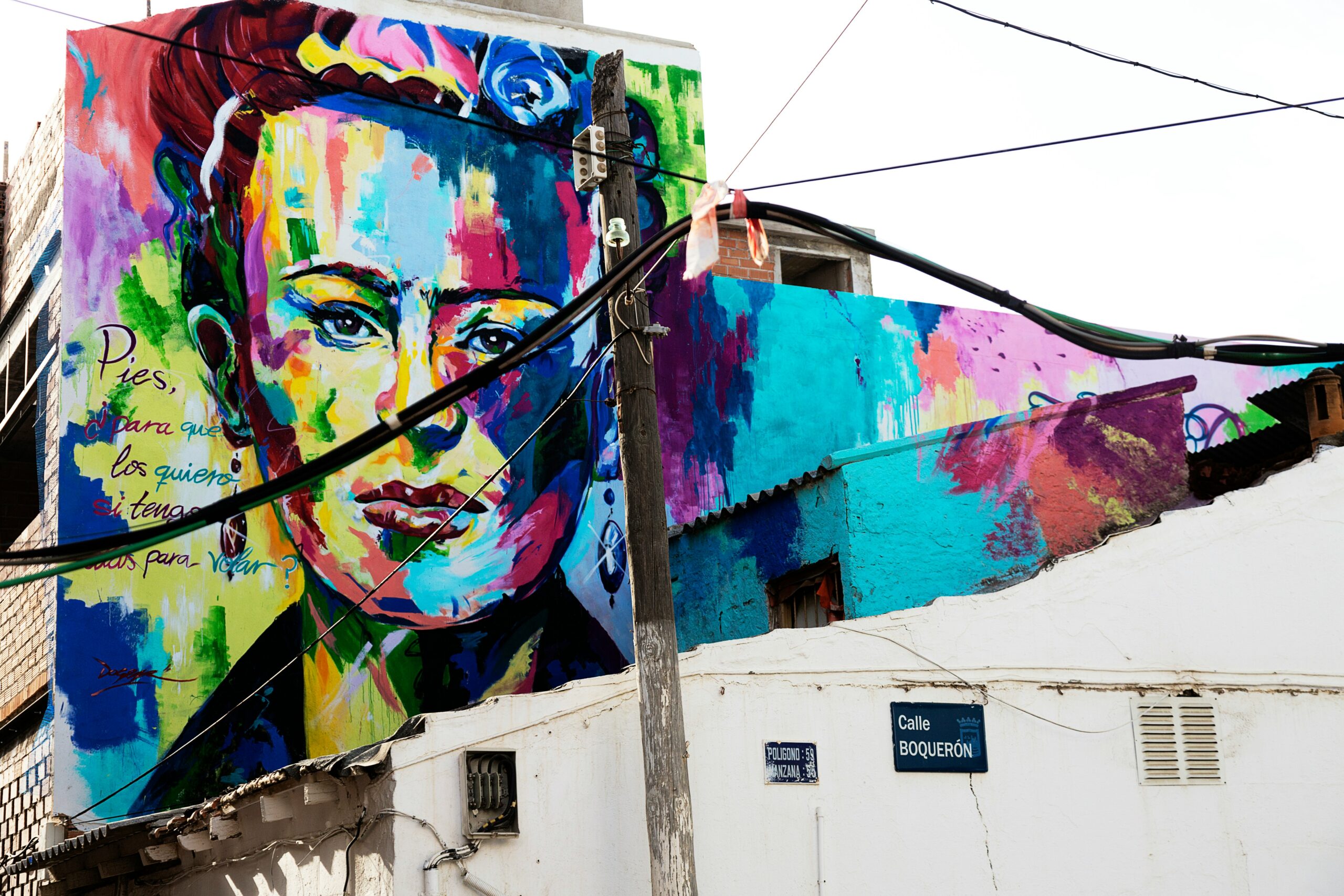
Frida Kahlo la conosciamo tutti, ringraziando Dio, quindi non vi starò a scrivere sulla sua vita e dei suoi quadri, se non l’aveste ancora fatto internet è pieno di articoli e video che parlano di lei e della sua arte.
Vi starete domandando perché cavolo vi scrivo questo articolo. L’altro sabato ho visto uno spettacolo a lido dei pini su Frida Kahlo, un monologo interpretato dall’attrice Maria Grazia Adamo, per la piacevole rassegna teatrale “Teatro in giardino”. In un piccolo e segreto giardino dietro il locale Cantina Soul, nel quale hanno allestito un palchetto con difronte una trentina di sedie e una piccola regia.
Vedere quello spettacolo mi ha fatto molto riflettere sul mondo delle donne. Ribadisco il concetto che Frida Kahlo è straconosciuta, e forse proprio per questo, quella sera sono riuscita ad andare oltre la sua storia. Rivedere la storia della sua vita mia ha fatto riflette su come noi donne siamo pericolose. Sì, hai letto bene. Perché se siamo oneste, noi donne abbiamo veramente qualcosa che non va nell’ambito del panorama affettivo. Anche la cara Frida Kahlo aveva un’ideologia distorta dell’amore.
E quante donne ancora oggi le somigliano, nonostante esser migliorato il nostro ruolo sociale, sì hai letto bene, se ti guardi indietro e se sei onesta, vedrai che ad oggi stiamo meglio di ieri, ed ovviamente abbiamo ancora molto lavoro da fare. Non dovremmo mai dormire sugli allori, la lotta all’emancipazione femminile è ancora lunga, e forse durerà tutta la vita.
Quando ho scritto l’articolo Non chiamatemeli diritti, ho avuto la consapevolezza di quanto il mio paese sia indietro nell’inclusione sociale della donna. La nostra entrata nel mondo del lavoro è molto in ritardo, ovviamente abbiamo sempre lavorato, ma da pochissimi anni è riconosciuta e tutelata, ed ancora facciamo molta fatica ad essere riconosciute e inserite in ruoli di potere.
Siamo in un momento storico nel quale molte barriere sociali sono state abbattute grazie alle donne del passato, ma ad oggi dobbiamo fare il nostro dovere, continuare a lottare e smetterla di perdere tempo, litigando tra di noi e per sciocchezze ortografiche.
E su quello che ci dovremmo concentrare è la nostra claudicanza, quella maledetta crocerossina in dotazione ad ogni donna, e quella fa dei grandi danni. È proprio lei che detiene le chiavi del giardino dove nasce e cresce l’albero dell’amore distorto, e non te le cederà a costo della sua vita.
Per anni ci hanno detto che l’uomo e la donna sono uguali, cazzate
Gli uomini la crocerossina non ce l’hanno dentro di loro, beati loro, ed ovviamente fanno scelte più lineari rispetto a noi. Un uomo a differenza di una donna è più semplice e selettivo, fateci caso.
Un uomo si sceglie la donna più bella o perlomeno più virtuosa, ha la propensione a migliorare la sua situazione economica e sociale. Un uomo ha molto ben chiaro i suoi valori, non si sceglierebbe mai una donna sbandata, drogata o libertina (magari con quella ci va anche lui, ma di certo non se la prende nella sua vita). Insomma, una donna senza equilibrio psicologico e morale non viene presa in considerazione da un uomo sano.
Invece prendiamo in esame la donna, quante donne sane, quante brave ragazze sono in relazioni tossiche. Quante donne non riescono ad uscire da queste situazioni, quanti ultimatum hanno dato, dopo il quale nulla è cambiato, anzi col quale hanno perso l’ultimo briciolo di dignità. Perché una donna ha la propensione a comprendere ed aiutare un essere umano sbandato? Ma soprattutto come riesce a non sentire quel puzzo di sopruso? In questi anni le storie di cronaca nera si sono susseguite, stesso copione, diversi i nomi delle persone e delle città.
È di questa claudicanza del tutto femminile della quale ci dobbiamo preoccupare, e risolvere, perché come dico da qualche anno, il patriarcato esiste grazie alle donne.
Sì, hai letto bene. Siamo l’ingranaggio più importante di questa storia, che viene oleato con la nostra disgregazione, con la nostra cecità, col nostro isolamento. Il primo passo da fare è essere oneste con noi stesse, ammettere le nostre debolezze, e quella di non essere universalmente unite è la più grande.
Ed aver visto quello spettacolo mi ha fatto riflettere su questa situazione sociale, quante Frida Kahlo hanno pensato che un uomo donnaiolo non l’avrebbe tradite? Per poi soffrire proprio per il loro tradimento. Che poi almeno per la vita di Frida Kahlo tutto quel dolore ebbe in qualche maniera un senso, essedo stato incanalato nella sua arte. Come se l’amore fosse la lama per squarciarsi il petto, che le donava il colore per dipingere le sue tele.
Ma il dolore dato dall’amore distorto di tutte le altre donne, dove va a finire? Che senso ha? Perché continua ad essere scelto?
FRIDA: SHE HEALED THROUGH PAINTING AND FELL ILL THROUGH LOVE
We all know Frida Kahlo, thank goodness, so I won’t go on about her life and her paintings; if you haven’t already, the internet is full of articles and videos about her and her art.
You’re probably wondering why on earth I’m writing this article. Last Saturday I saw a show at Lido dei Pini about Frida Kahlo – a monologue performed by the actress Maria Grazia Adamo, as part of the delightful theatre season ‘Teatro in giardino’. It took place in a small, secluded garden behind the Cantina Soul venue, where they’d set up a small stage with about thirty chairs in front of it and a small director’s booth.
Seeing that show really made me reflect on the world of women. I’d like to reiterate that Frida Kahlo is incredibly well-known, and perhaps precisely for this reason, that evening I managed to look beyond her story. Revisiting the story of her life made me reflect on just how dangerous we women are. Yes, you read that right. Because if we’re honest, there really is something amiss with us women when it comes to matters of the heart. Even dear Frida Kahlo had a distorted view of love.
And how many women today are still like her, despite the fact that our social role has improved? Yes, you read that right: if you look back and are honest with yourself, you’ll see that we’re better off today than we were yesterday, and of course we still have a lot of work to do. We should never rest on our laurels; the struggle for women’s emancipation is still a long one, and perhaps it will last a lifetime.
When I wrote the article ‘Don’t Call Them Rights’, I realised just how far behind my country is when it comes to the social inclusion of women. Our entry into the world of work has been very slow; of course, we have always worked, but it is only in the last few years that this has been recognised and protected, and we still struggle greatly to be recognised and appointed to positions of power.
We are living in a historic moment in which many social barriers have been broken down thanks to the women of the past, but today we must do our bit: continue to fight and stop wasting time arguing amongst ourselves over trivial spelling mistakes.
And what we should be focusing on is our own limping – that damned ‘Red Cross nurse’ complex that every woman is saddled with – and that causes a great deal of damage. It is precisely she who holds the keys to the garden where the twisted tree of love is born and grows, and she will not hand them over to you even at the cost of her own life.
For years we’ve been told that men and women are equal – utter rubbish
Men don’t have that ‘nursing sister’ instinct within them – lucky them – and, naturally, they make more straightforward choices than we do. Unlike a woman, a man is simpler and more selective – just think about it.
A man chooses the most beautiful woman, or at least the most virtuous one; he has a tendency to improve his economic and social standing. A man is very clear about his values; he would never choose a woman who is wayward, a drug addict or a libertine (he might even sleep with one, but he certainly wouldn’t bring her into his life). In short, a woman lacking psychological and moral stability is not considered by a healthy man.
Let’s consider women, however: how many healthy women, how many decent girls, are in toxic relationships? How many women are unable to escape these situations? How many ultimatums have they issued, after which nothing has changed – indeed, as a result of which they have lost their last shred of dignity? Why does a woman have a tendency to understand and help a wayward human being? But above all, how does she manage not to smell that stench of abuse? In recent years, crime stories have followed one after another, all following the same script, with only the names of the people and cities changing.
It is this entirely female weakness that we must be concerned about and resolve, because, as I have been saying for some years now, patriarchy exists thanks to women.
Yes, you read that right. We are the most important cog in this machine, which is kept running by our disunity, our blindness and our isolation. The first step is to be honest with ourselves, to admit our weaknesses – and the greatest of these is that we are not universally united.
And seeing that play made me reflect on this social situation: how many Frida Kahlos thought that a womanising man would never betray them? Only to suffer precisely because of his betrayal. Although, at least in Frida Kahlo’s life, all that pain somehow made sense, having been channelled into her art. As if love were the blade that tore open her chest, giving her the colour to paint her canvases.
But where does the pain caused by the distorted love experienced by all the other women end up? What is the point of it? Why do women continue to choose it?