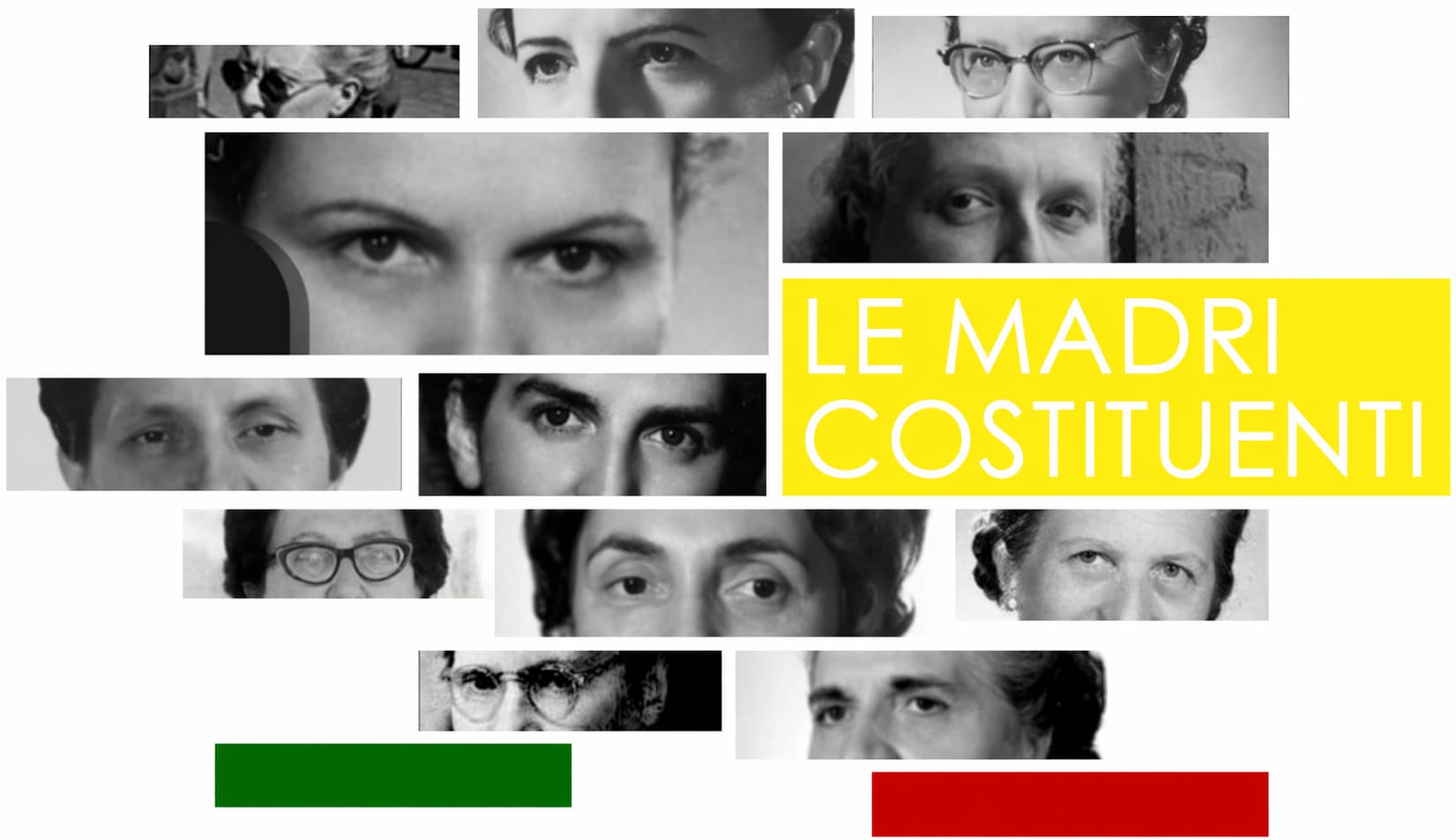
20 Madri Costituenti + 1 Filomena Delli Castelli
Era una domenica delle mie a zonzo per Roma, e mentre aspettavo Miguel un mio amico, sono entrata nella Feltrinelli di Torre Argentina e mi sono imbattuta in un bellissimo libro intitolato: Ventuno. Libro dedicato alle madri costituenti, scritto in prima persona come se fossero loro a raccontarsi, e intanto che saltavo da una pagina all’altra, ho conosciuto Filomena Delli Castelli.
Forse mi agganciò il titolo del capitolo dedicatole: Evviva il Cinema, poiché lo riconosceva come strumento culturale, ideale per la preparazione e la formazione dei giovani alla vita moderna. Un valido mezzo per conoscere le altre culture, base per lo sviluppo di una società democratica e aperta.
E continuando a leggere, scoprii una donna eccezionale, perché comune.
Nasce il 28 settembre 1916 a Città Sant’Angelo (Pescara) da una famiglia modesta. Il diploma magistrale nel 1933. La Laurea a pieni voti nel 1940 alla facoltà di Lettere presso l’Università Cattolica di Milano. Indipendente da subito si divideva tra lo studio e il lavoro di insegnante alle scuole elementari. Arrivò a Roma su richiesta di Mario Cingolani (Democrazia Cristiana) che la volle nel Movimento femminile del partito a livello nazionale. E dopo una campagna elettorale vinta nella propria regione, a soli trent’anni, fu eletta all’Assemblea costituente con oltre 27.000 voti di preferenza.
Mi fermo qui con la biografia, che potete cercare in rete, ci sono moltissime testimonianze di chi è stata Filomena Delli Castelli. Perché in questo articolo vorrei dare risonanza a qualcosa che ho saputo di quelle donne, delle Madri Costituenti.
Mi ha molto colpito la frase di Delli Castelli: “La pattuglia femminile della Costituente serrava i ranghi quando erano in discussione e da risolvere i problemi inerenti: il lavoro, la famiglia, la scuola.“
Ciò significa, che anche se erano 21 donne di partiti politici opposti, quando bisognava decidere per l’Italia, facevano quadrato tra di loro, e l’unico obiettivo comune era il bene del popolo italiano. Vallo a dire alla politica di oggi.
Erano davvero tutte unite per migliorare le condizioni della società dei loro tempi, una situazione sociale che noi non possiamo immaginare. Diamo molto per scontato la libertà della quale godiamo oggi. Quella libertà che ci hanno ottenuto quelle donne, vere femministe. Vallo a dire alle femministe di oggi.
È da pochissimo che mi sono affacciata in questo mondo, al quale vorrei dare il mio piccolo contributo, ma come la politica, denoto che anche l’attivismo femminista non detiene un bene comune, come ci hanno dimostrato di avere le madri costituenti. E quando non c’è unione, non c’è forza, e se siamo deboli, saremo spazzate via.
Quando c’è l’unione che fa la forza, i risultati sono concreti.
Ecco gli articoli conquistati dalle madri costituenti:
Art. 3 “Tutti i cittadini hanno pari dignità sociale e sono eguali davanti alla legge, senza distinzione di sesso, di razza, di lingua, di religione, di opinioni politiche, di condizioni personali e sociali. È compito della Repubblica rimuovere gli ostacoli di ordine economico e sociale, che, limitando di fatto la libertà e l’eguaglianza dei cittadini, impediscono il pieno sviluppo della persona umana e l’effettiva partecipazione di tutti i lavoratori all’organizzazione politica, economica e sociale del Paese.”
Art. 29 “La Repubblica riconosce i diritti della famiglia come società naturale fondata sul matrimonio. Il matrimonio è ordinato sull’eguaglianza morale e giuridica dei coniugi, con i limiti stabiliti dalla legge a garanzia dell’unità familiare.”
Art. 30 “È dovere e diritto dei genitori mantenere, istruire ed educare i figli, anche se nati fuori del matrimonio. Nei casi di incapacità dei genitori, la legge provvede a che siano assolti i loro compiti. La legge assicura ai figli nati fuori del matrimonio ogni tutela giuridica e sociale, compatibile con i diritti dei membri della famiglia legittima. La legge detta le norme e i limiti per la ricerca della paternità.”
Art. 37 “La donna lavoratrice ha gli stessi diritti e, a parità di lavoro, le stesse retribuzioni che spettano al lavoratore. Le condizioni di lavoro devono consentire l’adempimento della sua essenziale funzione familiare e assicurare alla madre e al bambino una speciale adeguata protezione. La legge stabilisce il limite minimo di età per il lavoro salariato. La Repubblica tutela il lavoro dei minori con speciali norme e garantisce ad essi, a parità di lavoro, il diritto alla parità di retribuzione.”
Concludo augurandovi un buon 25 Aprile Festa della Liberazione dell’Italia dal Nazi-Fascismo ottenutaci da tanti uomini e donne coraggiosi che hanno dato la vita per la Libertà.
Non dimentichiamo mai quello che hanno fatto per noi i figli dell’America, dell’Inghilterra e dell’Italia.
20 Mothers of the Constitution + 1 Filomena Delli Castelli
It was a Sunday when I was wandering around Rome, and whilst I was waiting for Miguel, a friend of mine, I popped into the Feltrinelli bookshop in Torre Argentina and came across a beautiful book entitled: Ventuno. A book dedicated to the founding mothers, written in the first person as if they were telling their own stories, and as I flipped from page to page, I came to know Filomena Delli Castelli.
Perhaps I was drawn in by the title of the chapter dedicated to her: Long Live Cinema, as she recognised it as a cultural tool, ideal for preparing and educating young people for modern life. A valuable means of learning about other cultures, the foundation for the development of a democratic and open society.
And as I continued reading, I discovered an exceptional woman, precisely because she was ordinary.
She was born on 28 September 1916 in Città Sant’Angelo (Pescara) into a modest family. She obtained her teaching diploma in 1933. She graduated with top marks in 1940 from the Faculty of Arts at the Catholic University of Milan. Independent from the outset, she divided her time between her studies and working as a primary school teacher. She arrived in Rome at the request of Mario Cingolani (Christian Democracy), who wanted her to join the party’s women’s movement at national level. And after winning an election campaign in her own region, at just thirty years of age, she was elected to the Constituent Assembly with over 27,000 preferential votes.
I’ll stop here with the biography, which you can look up online; there are countless accounts of who Filomena Delli Castelli was. Because in this article I would like to highlight something I learnt about those women, the Constituent Mothers.
I was very struck by Delli Castelli’s words: ‘The women’s contingent of the Constituent Assembly closed ranks when the issues at hand – work, family, education – were under discussion and needed resolving.’
This means that even though they were 21 women from opposing political parties, when decisions had to be made for Italy, they stood united, and their sole common goal was the good of the Italian people. Try telling that to today’s politicians.
They were truly all united to improve the conditions of society in their time, a social situation we cannot even imagine. We take the freedom we enjoy today for granted. That freedom was won for us by those women, true feminists. Try telling that to today’s feminists.
I have only very recently entered this world, to which I would like to make my small contribution, but just like politics, I notice that feminist activism does not hold the common good at heart, as the founding mothers demonstrated they did.
And when there is no unity, there is no strength, and if we are weak, we will be swept away.
When unity brings strength, the results are tangible.
Here are the articles secured by the Constituent Mothers:
Art. 3 “All citizens have equal social dignity and are equal before the law, without distinction of sex, race, language, religion, political opinions, or personal and social conditions. It is the duty of the Republic to remove those economic and social obstacles which, by limiting the freedom and equality of citizens, prevent the full development of the human person and the effective participation of all workers in the political, economic and social organisation of the country.”
Art. 29 “The Republic recognises the rights of the family as a natural society founded on marriage. Marriage is based on the moral and legal equality of the spouses, within the limits established by law to safeguard family unity.”
Art. 30 “It is the duty and right of parents to support, instruct and educate their children, even if born out of wedlock. In cases where parents are unable to fulfil these duties, the law shall ensure that their responsibilities are met. The law guarantees children born out of wedlock every form of legal and social protection compatible with the rights of members of the legitimate family. The law lays down the rules and limits for the determination of paternity.”
Art. 37 “Working women have the same rights and, for equal work, the same pay as working men. Working conditions must allow for the fulfilment of her essential family role and ensure special and adequate protection for the mother and child. The law establishes the minimum age limit for paid employment. The Republic protects the employment of minors through special regulations and guarantees them, for equal work, the right to equal pay.”
I conclude by wishing you a happy 25 April, the Day of Liberation from Nazi-Fascism, achieved by so many brave men and women who gave their lives for Freedom.
Let us never forget what the sons of America, England and Italy did for us.